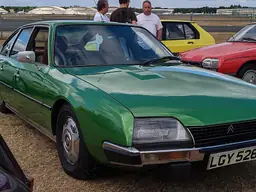
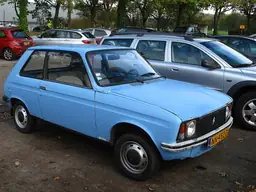
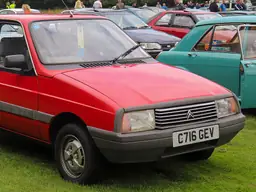
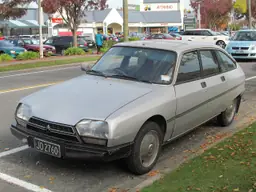
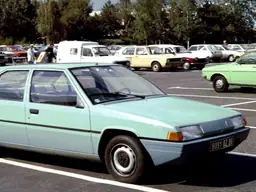
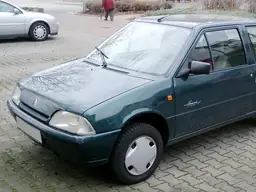
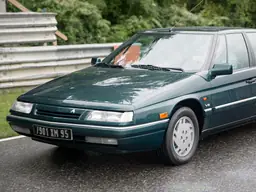
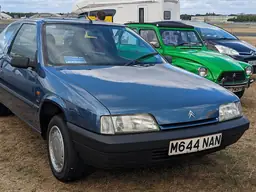
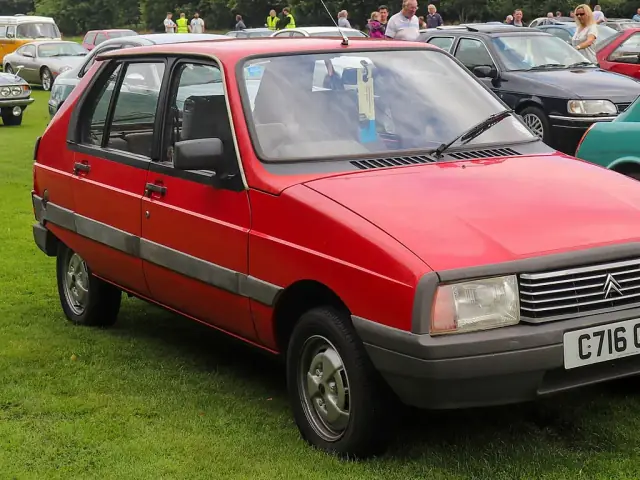
Citroen Visa (1981–1988)
History
Launched in 1978, the Citroën Visa was the first Citroën designed under PSA ownership, on a base close to the Peugeot 104. By the late 1980s the entry-level version still used a small air-cooled flat-twin from the same family as the 2CV's: 0.7 litres and 35 hp for around 720 kg. Practical and frugal, it was living out its final years alongside the AX.
Specifications
| Production | 1981–1988 |
|---|---|
| Engine | 0.7 L flat-2 |
| Power | 35 hp |
| Torque | 50 Nm |
| Top speed | 124 km/h |
| Weight | 722 kg |
| Weight-to-power ratio | 20.6 kg/hp |
| Driven wheels | Front-wheel drive |
| Gearbox | Manual |
| Country | France |
| Category | Youngtimers |
Rankings
| Criterion | Among Citroen models | In the whole catalogue |
|---|---|---|
| Power | 30th of 36 | 1,249th of 1,295 |
| Top speed | 28th of 34 | 1,091st of 1,155 |
Rarity
Although more than a million were built, the Visa has almost vanished from the roads, and well-kept twin-cylinder versions are starting to interest youngtimer fans. In the game it is class D: a common card.
Did you know?
The Visa spawned a four-wheel-drive rally version, the Visa 1000 Pistes, built in a run of 200 for its Group B homologation.