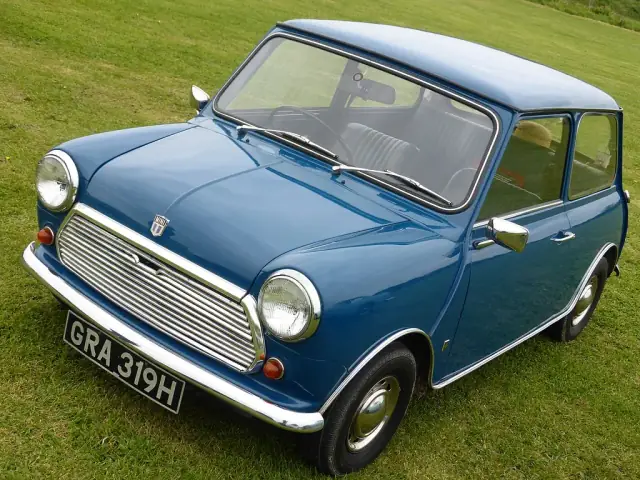
Mini Mini (1959–2000)
History
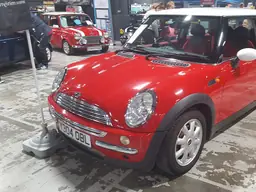
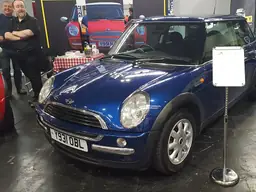
Designed by Alec Issigonis and launched in 1959, the Mini seats four adults in just over three metres thanks to its transverse engine with the gearbox tucked underneath. Built until 2000 under the Austin, Morris, Mini and finally Rover names, it won over workers, students, stars and racing drivers. With this 40 hp 998 cc engine, it reaches 132 km/h.
Specifications
| Production | 1959–2000 |
|---|---|
| Engine | 1.0 L 4 cyl. |
| Power | 40 hp |
| Torque | 69 Nm |
| 0–100 km/h (0–62 mph) | 19.0 s |
| Top speed | 132 km/h |
| Weight | 620 kg |
| Weight-to-power ratio | 15.5 kg/hp |
| Driven wheels | Front-wheel drive |
| Gearbox | Manual |
| Country | United Kingdom |
| Category | City cars |
Rankings
| Criterion | Among Mini models | In the whole catalogue |
|---|---|---|
| Power | 5th of 5 | 1,236th of 1,295 |
| Top speed | 5th of 5 | 1,062nd of 1,155 |
| 0–100 km/h (0–62 mph) | 5th of 5 | 799th of 863 |
Rarity
More than 5 million classic Minis were built and the car remains an icon closely followed by collectors, even though rust has claimed many. In the game it is class D: a common card.
Did you know?
A Mini Cooper S driven by Paddy Hopkirk won the 1964 Monte Carlo Rally against far more powerful cars.